
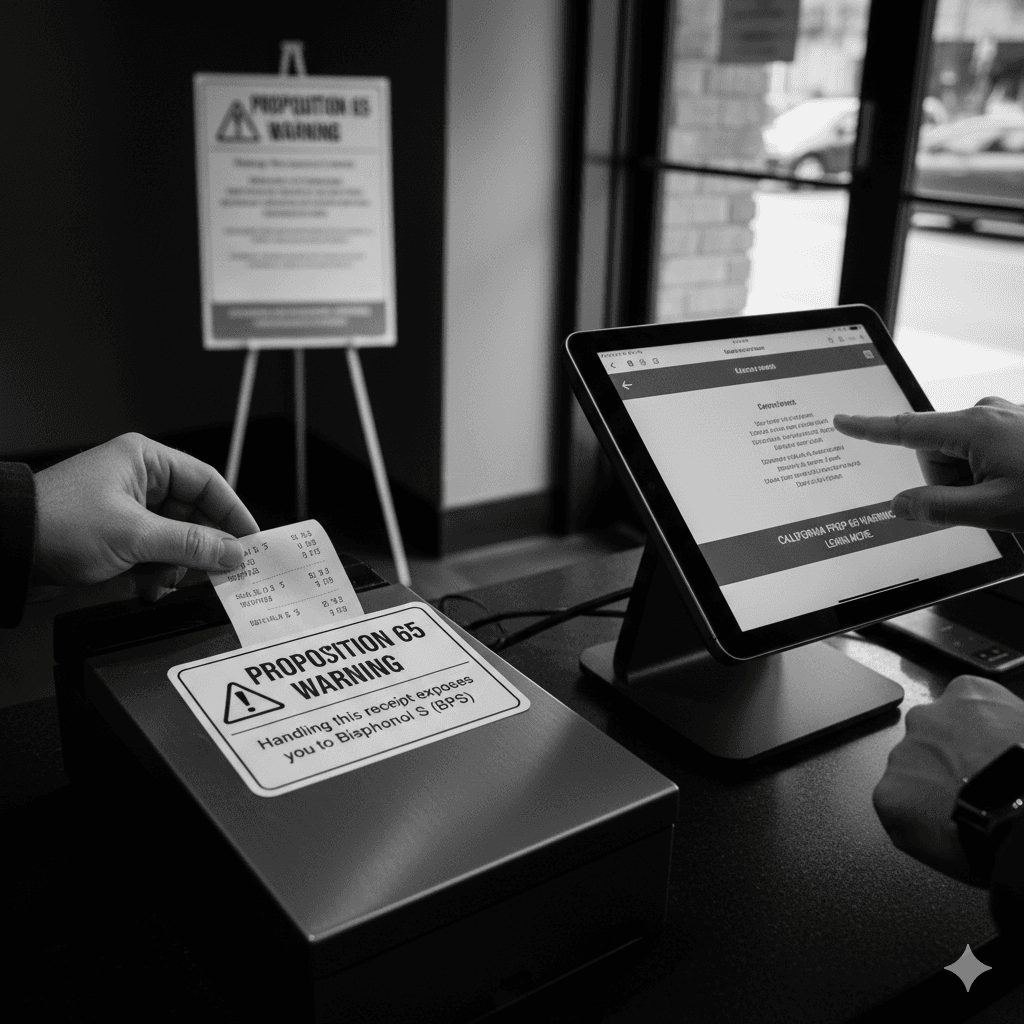
The Receipt Nightmare:
What California’s Prop 65 Means for Restaurants in 2025
California's Proposition 65 (The Safe Drinking Water and Toxic Enforcement Act of 1986) is a constant consideration for any business operating in the state. While most of the food industry is familiar with warnings for items like mercury in fish or acrylamide from baked goods, a recent enforcement trend has put a surprising, everyday item in the spotlight: Your Receipt Paper.
If you are a restaurant, café, or food retailer in California, it's time to review your compliance strategy.
What is Proposition 65? A Quick Refresher
Prop 65 requires businesses to provide a "clear and reasonable warning" before knowingly and intentionally exposing individuals to any of the over 900 chemicals on the state's list that are known to cause cancer or reproductive harm.
In the food world, exposures typically fall into three categories:
Naturally Present: Chemicals like Mercury in certain seafood.
Product/Process Related: Chemicals like Acrylamide that can form in many foods during high-temperature cooking (like frying or baking).
Environmental/Handling: Exposures from the business premises or the materials used—and this is where receipts come in.
The Thermal Receipt Paper Problem
The new wave of enforcement focuses on thermal paper used for receipts and tickets. This paper often contains Bisphenol S (BPS) or similar chemicals, which have been added to the Prop 65 list as a reproductive toxicant.
Handling a thermal receipt, even briefly, can result in exposure, and employees who handle rolls of paper or tickets throughout the day have an even greater potential exposure risk. For businesses, this means the seemingly benign act of handing a customer a receipt now requires a warning.
How to Achieve "Safe Harbor" Compliance Now
Prop 65 regulations specify precise ways for restaurants to provide warnings. To avoid costly fines and lawsuits, businesses must post the approved "Safe Harbor" warnings clearly.
1. In-Store Signage Requirements
The warning must be visible to the customer before exposure. The standard "Safe Harbor" method for restaurants includes:
Exposure Type | Signage/Notice | Size & Placement |
Food & Beverages | General food and non-alcoholic beverage warning (mentioning acrylamide and mercury). | 8.5" x 11" at each public entrance where food is consumed. |
Receipts/POS | Specific warning for Bisphenol S (BPS) in thermal paper. | 5" x 5" at each point-of-sale (POS) where paper receipts are issued. |
Menus | The warning text must be included and displayed in a font size no smaller than the largest type size used for the names of general menu items. |
2. Digital & Online Compliance
For online ordering, delivery apps, and your company website, a digital warning is required:
The warning text must be clearly displayed.
It must include a hyperlink to the official state website: www.P65Warnings.ca.gov.
3. The Proactive Solution: Go Phenol-Free
Ultimately, the best way to eliminate the need for a BPS warning for receipts is to remove the chemical entirely. Contact your POS supplier or paper vendor and demand phenol-free (BPA-free and BPS-free) thermal paper. Proactive replacement of your paper supply can significantly reduce your liability exposure.
The Bottom Line
California's Proposition 65 is a strict liability law—intent does not matter, only compliance. Penalties for non-compliance can reach up to $2,500 per violation per day. For California restaurants, compliance is not just about the food you serve, but every material item your customers and employees handle. Review your paper supply and update your signage today.
Disclaimer: This blog post is for informational purposes only and is not legal advice. Businesses should consult with legal counsel to ensure full compliance with California Proposition 65.